In many South Indian homes, the evening cup of tea or filter coffee is never served alone. A steel tin of crunchy savouries sits nearby, and during Deepavali those tins multiply. Here is a quick guide to the most loved ones and what makes each of them special.
Murukku
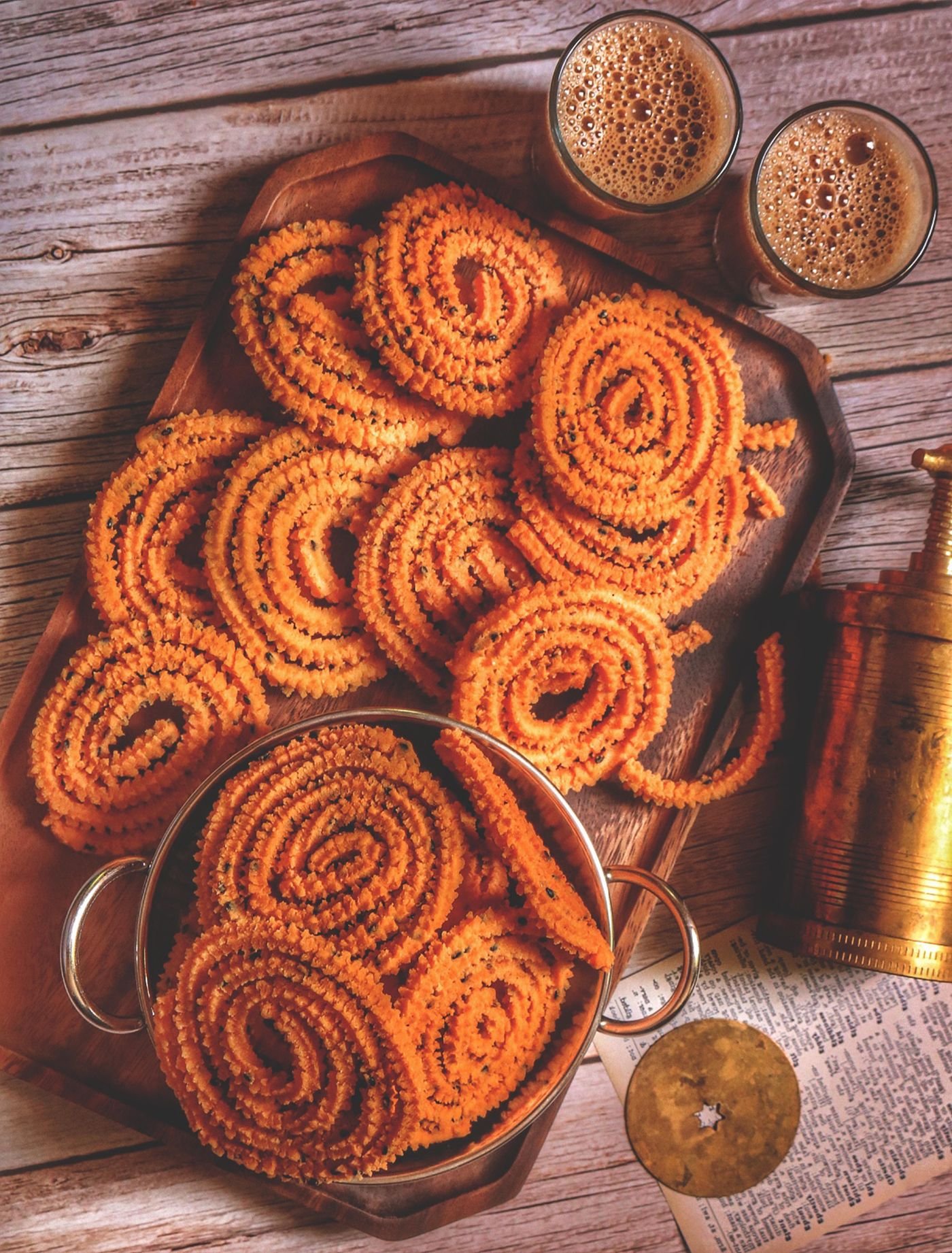
The name comes from the Tamil word for “twisted”. A dough of rice flour and urad dal, flavoured with cumin or sesame, is pressed into spirals and fried until golden. A good murukku is crisp, light and breaks with a clean snap.
Thenkuzhal
A close cousin of murukku, thenkuzhal is pressed through a plate with small round holes, giving fine, smooth strands. It is usually simpler in flavour and very light, which is why it is a festival favourite.
Thattai
Thattai means “flattened”. Small discs of rice flour dough, often with chana dal, curry leaves and chilli, are pressed thin and fried. They are flat, crunchy and slightly spicy, and they travel well.
Ribbon pakoda
Pressed through a flat, slotted plate, the dough comes out as thin ribbons. The shape gives lots of crunchy edges, and a touch of chilli and asafoetida makes it one of the most snackable savouries in the tin.
Karasev
“Kara” means spicy. Karasev is made from gram flour with pepper or chilli, pressed into short, rough sticks. It is bolder than murukku and pairs perfectly with a strong cup of tea.
How to build a snack plate
- Mix textures: one light snack (thenkuzhal), one flat (thattai) and one spicy (karasev).
- Add something sweet, such as a laddu, to balance the spice.
- Serve small portions and keep the rest sealed so it stays crisp.
Tip: If snacks lose a little crunch, warm them in a dry pan on low heat for a minute, then let them cool before storing again.
Fill your snack tin
Traditional savouries for tea time, travel and festivals.